
Every clinical outcome at every future time point.
Predicted with unparalleled precision.
These twins forecast clinical outcomes at every future time point.
Predicted with unparalleled precision.

Digital twins are AI-generated forecasts of an individual trial participant’s control outcomes. By forecasting clinical outcomes at every future time point with unparalleled precision, they serve as the powering technology for a more rigorous clinical analysis.
Increase power while maintaining sample sizes, or reduce control arm size while preserving power. This methodology improves sensitivity across primary and secondary endpoints for a clearer signal of efficacy.
Generate participant-level synthetic control arms to enable credible treatment comparisons when randomization is infeasible. Strengthen high-stakes go/no-go decisions through improved statistical sensitivity.
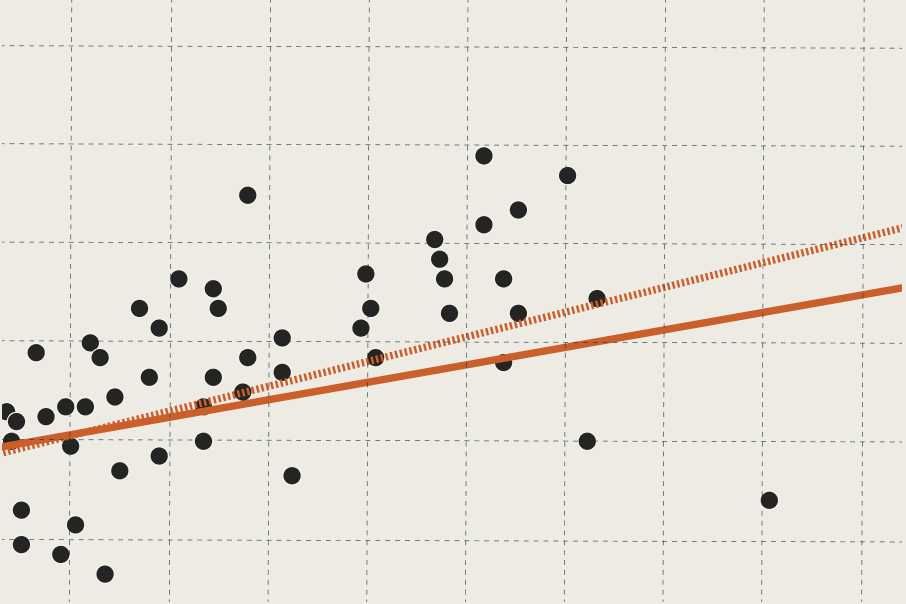
Improve sensitivity in interim looks and subgroup analyses to catch signals that traditional methods may miss. Re-evaluate historical trial data using regulatory-aligned methods to support learning across programs.
Unlearn’s methods have been recognized and supported by both U.S. and European regulators.
PROCOVA was officially qualified by the European Medicines Agency for use in Phase 2 and 3 trials with continuous outcomes.
U.S. FDA provided positive feedback on PROCOVA, supporting its use in covariate-adjusted analyses across clinical development.
FDA recommends that sponsors adjust for covariates that are anticipated to be most strongly associated with the outcome of interest…it may be useful to use previous studies to select prognostic covariates or form prognostic indices.
In a trial that uses covariate adjustment, the sample size and power calculations can be based on adjusted or unadjusted methods.
Our Digital Twin Generators (DTGs) are trained with extensive patient-level historical data to generate forecasts of individual disease progression under control or standard of care.
In addition to our validated DTGs, Unlearn enables sponsors to securely build and deploy custom DTGs using their proprietary data—entirely within their own secure environments and under their control. Deployment is flexible and scalable, available as a web-based application or a secure, on-premises solution within the sponsor’s cloud infrastructure.
Built to meet regulatory-grade compliance standards, including GxP, 21 CFR Part 11, and SOC 2 Type 2, Unlearn’s technology ensures sponsors maintain complete control over their systems, security, and data integrity.
We encourage you to request our specification sheets to gain a comprehensive understanding of our models, including its capabilities and underlying data.
.svg)
Disease-specific ML models trained on extensive historical clinical data generate digital twins for each trial participant using only their baseline data.
.webp)

Every clinical outcome at every future time point.
Predicted with unparalleled precision.
These twins forecast clinical outcomes at every future time point.
Predicted with unparalleled precision.


